

In late June 1994, Pride Winnipeg (then known as Lesbian, Gay, Bisexual Pride) recognized the 25th anniversary of the Stonewall Rebellion – Stonewall 25. Also know as the Stonewall Riots and the Stonewall Revolution, the Stonewall Rebellion took place in 1969 at the Stonewall Inn, a popular gay bar in New York’s Greenwich Village. Gay bars were frequently and routinely targeted by police raids in the 1960s, and the Stonewall Inn was once again raided on June 28, 1969. Tired of frequent harassment and discrimination, the patrons of the bar resisted the arrests and fought back against the police, sparking several days of protests, demonstrations, and solidarity marches.
Although the Stonewall Rebellion was not the first act of resistance and activism by the gay community, it is widely considered the catalyst for the modern 2SLGBTQI+ rights movement in North America. With the slogan, “It’s a Riot!” the 1994 Winnipeg 2SLGBTQI+ community acknowledged these pivotal riots with numerous events including a march and variety show.
In an interview with CPHS founder Jonathan Niemczak, an organizing member of Pride Winnipeg, Karen Amirault, recalls planning the 1994 event.
For the perspective of Stonewall, it was really important that when myself [Karen Amirault] and a few other people [including Gloria Enns, Michelle Paquette, and Rob Taylor] started to brainstorm what we would do, we would try and just really put together a historical kind of perspective of what were the events? We could kind of do a staged event of Stonewall and the riot that started there.
June 25, 1994
Screening at the Planetarium
Presented by Third Theme/PFLAG, the first event of Stonewall 25 was a screening of the 1993 documentary, Queer Son. Directed by Vickie Seitchik, the film includes a series of interviews of parents coming to terms with their children’s sexual orientation.
This event was held at the Planetarium Auditorium on 100 Rupert Ave in downtown Winnipeg, Manitoba on Saturday, June 25, 1994.

Often depicted as an inverted triangle, this shape has been reclaimed as a symbol of Pride. The pink triangle was originally used in Nazi concentration camps to identify male homosexuals and bisexuals, and transgender women.
June 26, 1994
Sunday, June 26, 1994 began with breakfast at 9 am at CLUB 200, a gay bar that opened in 1988 and is still open today. The breakfast ran until 12 pm and was sponsored by Metropolitan Community Church.
Karen Amirault had been part of Pride Winnipeg since its conception in 1987. She commented on the importance of the Pride movement.
When you're fighting for rights, the politics are very much front and present. When things have been achieved, that tends to get forgotten. And that's why the history is very important, to say “this is why we were active and why we celebrate it”.
Rally at the Legislature
At 2:30 pm, Pride Winnipeg gathered at the Legislature for a rally featuring community leaders.
Among the speakers were:
Betty Baxter
Gay Games organizer
Glen Murray
City Councillor

Glen Murray was the Mayor of Winnipeg from 1998-2004. He was the first openly gay mayor of a large North American city. He continued to work in politics for the Ontario Liberal Party and served as a Liberal Member of Provincial Parliament for Toronto Centre from 2010-2017.
Murray was a founding member of the Winnipeg's Village Clinic, which was a leader in community-based prevention, care, and treatment centre for HIV/AIDS in Canada. He was also a founding member of the Canadian AIDS Society.
Albert McLeod
City Councillor
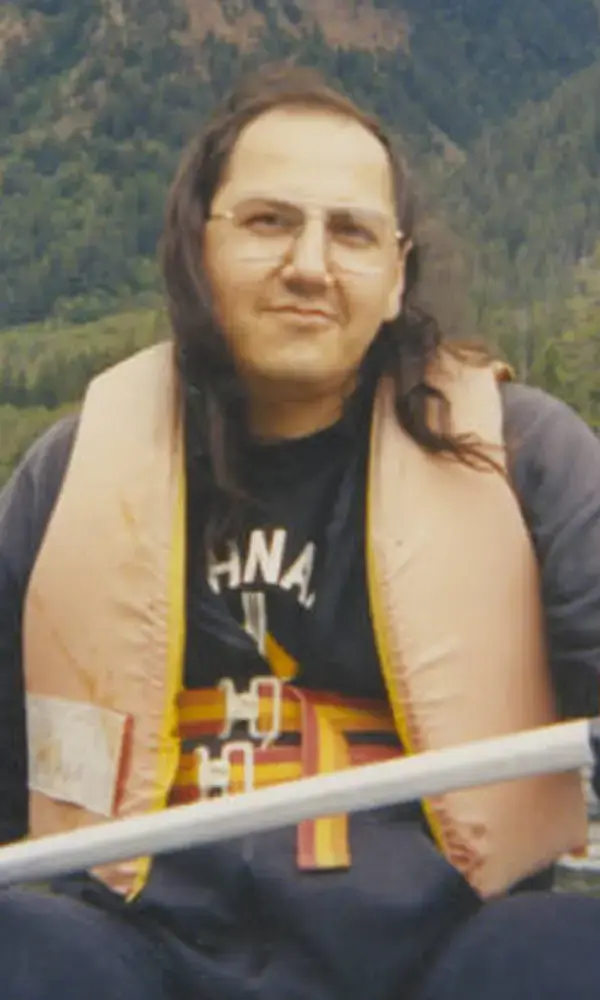
Albert McLeod is an activist known as “the grandmother of Manitoba’s Two-Spirit movement” and is recognized as a pioneer in HIV education for Indigenous people. He is a Status Indian with ancestry from Nisichawayasihk Cree Nation and the Métis community of Norway House in northern Manitoba.
McLeod has fought for the rights and recognition of Two-Spirit people since 1986 and has been an HIV/AIDS activist since 1987.
Rally at the Legislature
At 2:30 pm, Pride Winnipeg gathered at the Legislature for a rally featuring community leaders.
Among the speakers were:

Betty Baxter was a board member and spokesperson for the 1990 Gay Games in Vancouver and became the first openly lesbian candidate for a Canadian national office in 1993. She participated at the Summer Olympics, first as a team member on the women’s national volleyball team in 1976, then as head coach in 1979. However, as rumors spread about her sexuality in 1982, she was fired as the national team’s coach.
Baxter, who was not out at the time, went on to co-found the Canadian Association for the Advancement of Women in Sport and the National Coaching School for Women.

Glen Murray was the Mayor of Winnipeg from 1998-2004. He was the first openly gay mayor of a large North American city. He continued to work in politics for the Ontario Liberal Party and served as a Liberal Member of Provincial Parliament for Toronto Centre from 2010-2017.
Murray was a founding member of the Winnipeg's Village Clinic, which was a leader in community-based prevention, care, and treatment centre for HIV/AIDS in Canada. He was also a founding member of the Canadian AIDS Society.

Albert McLeod is an activist known as “the grandmother of Manitoba’s Two-Spirit movement” and is recognized as a pioneer in HIV education for Indigenous people. He is a Status Indian with ancestry from Nisichawayasihk Cree Nation and the Métis community of Norway House in northern Manitoba.
McLeod has fought for the rights and recognition of Two-Spirit people since 1986 and has been an HIV/AIDS activist since 1987.
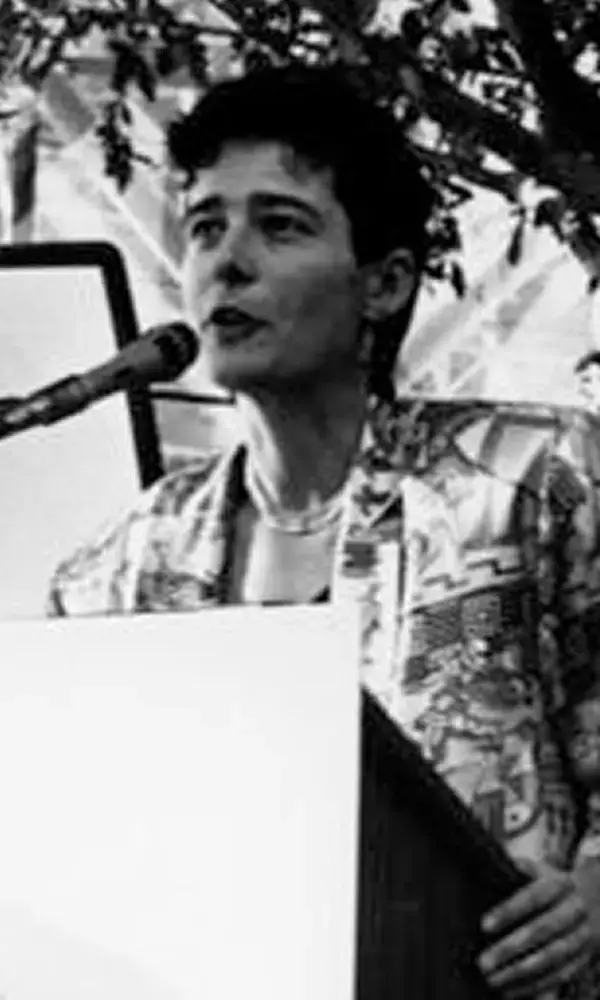
Betty Baxter was a board member and spokesperson for the 1990 Gay Games in Vancouver and became the first openly lesbian candidate for a Canadian national office in 1993. She participated at the Summer Olympics, first as a team member on the women’s national volleyball team in 1976, then as head coach in 1979. However, as rumors spread about her sexuality in 1982, she was fired as the national team’s coach.
Baxter, who was not out at the time, went on to co-found the Canadian Association for the Advancement of Women in Sport and the National Coaching School for Women.
March through the Streets
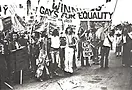
Following the rally, there was a march along the streets of Winnipeg. Flyers advertising the event called for the community to “bring [their] musical instruments, banner, and floats”. Phone numbers for two pride organizers, Gloria and Doug, were also provided on the flyers for attendees seeking childcare or wishing to showcase their art or other talents during the event.
Later that day, a special Pride Day Service was held at St. Steven’s United Church.



Evening of June 26th, 1994
Variety Show at The Forks
Although Pride events are often synonymous with marches, the showpiece of the 25th anniversary of Stonewall was a Variety Show held later that evening at The Forks. This Show was equal parts party and educational event, as performers and attendees celebrated and acknowledged the ongoing fight for gay liberation and LGBTQ+ rights.
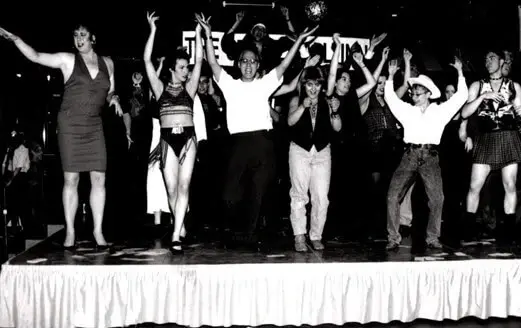


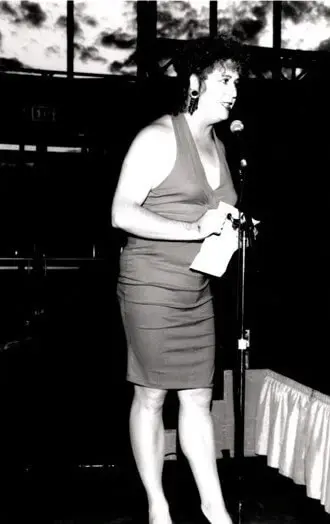


Although the 1994 Variety Show was held 25 years after Stonewall, Karen stressed the importance of not only celebrating the anniversary of Stonewall, but everything that came after in the fight for 2SLGBTQ+ rights and representation.
We’re actually doing a historical review for people who weren't around in the days of the 60s, the 70s, the 80s. We really brought in to make a show. And we did it mostly with music and a narrative that was talking about what each of these time periods were doing in terms of being out, being LGBTQ. And people don't realize that the letters weren't there in the acronym, but everybody was there. Everyone that is here today was there in representation.
And we did that show public. The Forks didn't shut down.
This virtual exhibition was made possible thanks to materials provided by Karen Amirault and the University of Manitoba Archives.
If you have any additional materials to support this virtual exhibition, or have any questions/comments about any of the information on this page, please email: edu.res@cphs.ca